Business Name: BeeHive Homes of Helena
Address: 9 Bumblebee Ct, Helena, MT 59601
Phone: (406) 457-0092
BeeHive Homes of Helena
With so many exceptional years of experience, the caretakers at Beehive Homes have been providing compassionate and personalized care for aging loved ones. Beehive Homes distinguishes itself through a higher level of assisted living licensed care (categories A, B, and C) that allows our residents to make the most of their golden years. Our skilled nurses provide adult residential living, memory care, hospice, and respite services to build and maintain a fulfilling and safe atmosphere for retirees. So please give us a call to schedule a free assessment, or visit our website to learn more about what Beehive Homes can do to ensure that your loved ones are given the best possible home.
9 Bumblebee Ct, Helena, MT 59601
Business Hours
Monday thru Sunday: Open 24 hours
Facebook: https://www.facebook.com/beehivehelena/
YouTube: https://www.youtube.com/user/BeeHiveCare
Families often ask a version of the same concern: "Is Mom much better off in a big assisted living community with great deals of services, or a small home where everybody knows her name?"
After twenty years working around senior care and strolling lots of households through this decision, I have actually stopped offering fast responses. The size of a residence forms almost whatever that follows: how quick personnel notice modifications, how calmly an individual with dementia can move through their day, how safe a frail resident feels taking a shower, how respite care actually seems like rest for the family.
The right size is less about square video and more about what that space does to human behavior. Noise, presence, staffing patterns, even how far the dining room is from the bed room, all collaborate to make care much easier or harder. Comprehending those characteristics helps households select wisely amongst assisted living, memory care, respite care, and longer-term elderly care options.
How scale modifications senior care on the ground
A hundred-bed assisted living neighborhood and a six-bed residential care home might market similar services: meals, support with bathing, medication management, social activities. On paper, they can look interchangeable. In practice, their size reshapes almost every routine.
In a larger assisted living neighborhood, there is frequently a clear structure. Standardized care plans, printed activity calendars, a devoted memory care wing, nurses on-site for more hours, and specialized staff for jobs like transport or housekeeping. People who grow on range and take pleasure in seeing many faces often enjoy this environment.
In a smaller sized home setting, structure comes more from practice and personal relationships. The caretaker who assists with breakfast normally also notifications if somebody slept badly. Schedules flex more quickly around specific preferences. A resident can wake later without missing out on the only breakfast seating of the day. Rather of a "program," you get a home rhythm.
Neither model is immediately better. The day-to-day realities of dementia, movement loss, or post-hospital recovery will determine which scale enhances quality of life and which amplifies stress.
Memory care and the function of environment
For individuals dealing with dementia, space is not neutral. The level of stimulation, range in between essential locations, and large number of individuals encountered each day can either soothe the nervous system or keep it on high alert.
In huge memory care units, I have actually watched citizens become overwhelmed just strolling to lunch. The route might involve a long passage, a hectic lobby, or a noisy elevator ride. By the time they reach the dining room, their anxiety is already raised, and the actual meal ends up being another difficulty. Personnel do assisted living their finest, but the architecture and tenancy work versus them.
By contrast, in a well-run, smaller sized memory care home, the dining table typically sits within sight of the living-room chairs. A resident can see where everybody is gathering and drift there at their own pace. There are less individuals, less completing noises, and much shorter distances. Somebody who may be identified as "exit seeking" in a large unit sometimes appears less uneasy when they can securely rate a little yard or stroll a short loop around a single-story home.
Scale also impacts how quickly subtle changes are noticed. In a large memory care system with turning personnel, a resident's brand-new confusion or small change in gait may not register for days unless it crosses a significant threshold. In a smaller sized home, two caregivers might right away remark, "She seems off today" and call the nurse or family early. That can be the distinction in between capturing a urinary system infection early or managing a preventable hospitalization later.
At the same time, big memory care programs tend to offer more specific activity personnel and structured engagement. For a younger person with early-onset Alzheimer's who still takes pleasure in seminar, music programs, or tailored exercise classes, the offerings in a larger community can enhance state of mind and maintain function. A small home might lean greatly on television, basic crafts, or informal conversation, which serves some locals well but not everyone.
The core concern is how the person's specific type and phase of dementia interacts with stimulation, crowding, and regimen. Somebody who was always sociable and enjoys range may endure or even embrace a larger assisted living memory care system. A person who has begun to withdraw, becomes easily stunned, or fixates on loud environments might function far better in a home-sized setting.
Respite care: tension test or soft landing?
Respite care is short-term senior care, often lasting from a few days to a few weeks, suggested to offer household caregivers rest or cover a gap after hospitalization. The setting can be a bed in a big assisted living neighborhood, a devoted respite program, or a room in a smaller residential home.
Here, size influences not just the resident's experience but also how well the respite duration addresses an essential question: "Could this become a great long-term option?"
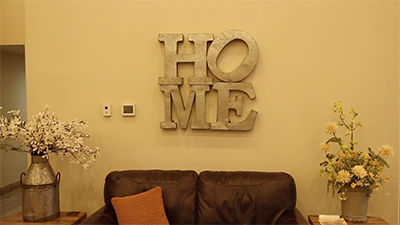
Larger communities use respite remains as trial runs. A brand-new resident may remain for two weeks after a surgery while the family examines whether assisted living could be a permanent action. During that time, personnel can observe care requirements, test fall threat strategies, and gauge how the person does with group dining and structured activities. If the shift to full-time residency takes place, continuity is reasonably smooth due to the fact that systems are currently in place.
However, larger environments can feel disorienting for somebody currently overwhelmed by change. They might spend much of the respite period simply trying to figure out where their space is, who to request aid, and how to handle sound and crowds. Household often misread that distress as evidence that their loved one "might never thrive anywhere except home," when what they are actually seeing is the interaction between cognitive impairment and a big, intricate setting.
Small homes can provide a gentler on-ramp for respite care. The variety of people to learn is restricted, the physical design is easy, and routines are simple to follow: breakfast smells from the next space, the very same caregiver knocking each early morning, the very same two or three homeowners at the cooking area table. Household caregivers often feel more comfortable leaving a partner or parent in such an environment for the first time.
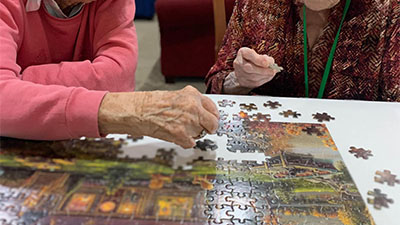
Yet, the very intimacy that makes respite care in a small home simple can likewise obscure longer-term needs. A few extremely mindful caregivers can compensate for increasing behavioral obstacles during a short stay, but the home might not have safe and secure doors, on-site medical oversight, or the staffing depth to sustain that effort over lots of months or years. For respite, it can look perfect. For the next stage of memory care, it might be inadequate.
When households utilize respite care to check a future living option, the size concern matters: Are you seeing how your loved one reacts to this particular building and its routines, or are you overgeneralizing from a short encounter with a scale of care that will not be sustainable as requirements escalate?

Long-term assisted living and the weight of routine
Long-term elderly care in assisted living is essentially a settlement in between stability and versatility. Size of setting affects both.
Large assisted living communities often preserve stability through formalized systems. Care strategies are upgraded routinely, medication lists are examined by central drug store partners, and nurses track weight patterns, hospitalizations, and care level modifications. If one caregiver leaves, another actions in following recorded regimens. Residents take advantage of redundancy and institutional memory.
The trade-off is that versatility typically requires several approvals. Adjusting a shower time, altering from group dining to in-room meals, or modifying how toileting support is provided might need to pass through managers and electronic charting systems. The family might feel they are continuously filling out forms and waiting for changes to be implemented. For residents whose needs shift frequently, that delay can result in frustration or even preventable health issues.
In a little home, flexibility is immediate. If a resident sleeps terribly and gets up upset, breakfast can wait, and a caretaker can sit with them quietly. If somebody starts sundowning at 4 p.m., the tv can go off, lights dimmed, and familiar music began without a committee conference. The whole house can react as one organism due to the fact that there are fewer moving parts.
Yet, little settings typically fight with formal quality assurance. Weight patterns may be tracked by hand on a clipboard. Medication inconsistencies may count on a single certified nurse capturing them during a weekly visit. When care is provided by impulse and close observation, it can feel more personal, however it is easier for patterns to be missed out on when workloads surge or personnel change.
I have actually seen locals in both types of settings flourish and decrease. The essential aspect is whether the size of the home supports a steady, foreseeable routine that still has space for personalization. Every day life for an older adult with frailty or dementia need to seem like a well-worn course, not an obstacle course.
Safety, staffing, and visibility
Families appropriately ask about staffing ratios, but ratio numbers alone do not tell the entire story. How far staff needs to walk to respond to a call, the number of doors they should monitor, and how quickly they can aesthetically scan an area all shift dramatically with home size.
In a big assisted living structure with long corridors and several floors, it is common to see centralized nurse stations and call light systems. Action times may be kept track of digitally, and staff carry phones or pagers. A two-person assist for transfers is much easier to set up since there are more personnel in the building, however getting the 2nd person to the space may take time, especially throughout peak hours like early morning care.
In a smaller sized residential care home, a caretaker might stand up from the dining table and reach every bedroom in less than thirty seconds. Alarms are usually low-tech: an easy bell on a door, chimes, or motion sensing units that play a sound. Visual supervision is consistent, not due to the fact that of sophisticated technology, but because there simply are few different spaces to manage.
That distance improves action to falls and subtle changes but comes at a cost if staffing collapses. In a six to ten bed home, one caretaker calling out ill can cut in half the workforce for the day. Agencies and backup caretakers can fill the space, but training consistency suffers, and homeowners might feel the disruption more acutely.
Large neighborhoods are less delicate in that sense. Ill calls are soaked up more quickly, and there is often a staffing workplace or scheduler whose task is to maintain protection. Nevertheless, the large size can mask pockets of understaffing: a far wing where one caretaker silently manages too many individuals, or a memory care unit that obtains personnel frequently for emergencies in assisted living.
Visibility likewise affects self-respect. In smaller homes, staff and locals see each other continuously, which increases familiarity but can minimize personal privacy. Doors exposed for security may expose individual care more readily. In larger settings, homeowners can pull away to personal spaces, however staff may not discover isolation or subtle withdrawal as quickly.
Social life, identity, and choice of scale
Human beings do not stop requiring identity and purpose at 85. The kind of social environment formed by home size can either support that need or flatten it.
Large assisted living communities resemble small villages. Locals can find other card gamers, fellow retired teachers, or veterans. Activity calendars might consist of lectures, spiritual services, physical fitness classes, and intergenerational visits. For higher functioning older grownups with excellent movement, this range can preserve a sense of self and keep anxiety at bay.
Yet, citizens with movement disability or cognitive decrease often have a hard time to participate. Long distances, puzzling layouts, or the requirement to demand escort support make spontaneous engagement rare. Activities run the risk of ending up being the domain of the "well elders," while those requiring more extensive elderly care remain in their spaces, gone to mainly by assistants on tight schedules.
In smaller sized homes, social life focuses around shared spaces. The living room, cooking area table, and yard are the primary stages. Group size is small enough that even quieter locals are known, and everyday rituals such as folding towels, assisting set the table, or seeing the very same show develop micro-communities. Recurring, familiar interactions are frequently better endured by individuals with memory loss.
The downside is restricted option. If three homeowners like game programs and one wants symphonic music, compromise becomes necessary. Diverse interests are more difficult to accommodate. A resident who yearns for more intellectual stimulation or larger social circles might begin to feel confined.
When evaluating size, households should ask: Does my parent draw energy from bigger groups and structured programs, or do those scenarios leave them drained and irritable? Do they still start new relationships, or do they rely heavily on familiar faces? The sincere answers point toward the scale of setting more than likely to support psychological health.
Cost, policy, and surprise trade-offs
Financial truths often shape options as much as medical requirements. Bigger assisted living and memory care communities usually bring higher overhead: business kitchen areas, management staff, compliance teams, transportation services, and marketing. Monthly rates reflect those expenses. On the other hand, their scale can permit them to accept greater skill residents under well-defined care levels, possibly delaying or preventing a transfer to nursing home care.
Smaller residential care homes may be more economical or similarly priced, depending upon location and staffing model. They might have lower structure and administrative costs but greater per-resident staffing expenditures since each caretaker is supporting less residents. Some offer really competitive rates initially, then add charges as care requirements grow, simply as larger centers do.
Regulation includes another layer. In some states, little homes run under the very same licensing rules as big assisted living facilities. In others, they fall under different categories with unique staffing or training requirements. A lovely house with attentive caregivers is not always geared up to handle complex medical needs or behavioral problems, regardless of great intentions.
Families in some cases overestimate what either design can do. Neither standard assisted living nor small residential homes work as full medical facilities. For homeowners with unstable medical conditions, severe behavioral signs, or late-stage dementia needing constant nursing oversight, nursing homes or specialized behavioral health facilities may become essential, despite preferences about home size.
The useful judgment lies in picking a setting that can properly handle the next a number of years, not just the next three months.
When larger assists, and when smaller heals
Patterns emerge when you follow homeowners through different kinds of senior care long enough.
Larger assisted living or memory care units tend to work well when:
- The resident enjoys structured activities, group settings, and variety. Medical requirements are reasonably complicated, with frequent medication changes or monitoring. The family values on-site nursing existence and formalized oversight. Social identity is still strong, and the individual loves broader peer groups.
Smaller residential or home-like settings tend to work well when:
- The resident ends up being overwhelmed by sound, crowds, or complex layouts. Dementia has progressed to the point where routine and familiarity matter more than variety. Mobility is restricted, and much shorter distances improve safety and lower falls. The family worths direct, individual interaction with the exact same small group of caregivers.
These are tendencies, not rigid rules. There are peaceful corners in huge structures and vibrant discussions in small homes. What matters is the dominant pattern and how it lines up with the resident's temperament, health, and history.
A practical method to assess size for your family member
Families typically feel pressure to choose rapidly, specifically after a hospitalization. A brief, methodical technique helps cut through marketing language and concentrate on how a space really functions.
Here is a concentrated checklist you can use when exploring or thinking about alternatives:
- Walk from a resident room to the dining area and typical spaces as if you had arthritis or utilized a walker, and choose whether that day-to-day trip would be realistic. Ask how many different caretakers will normally assist your relative in a week, and how frequently personnel tasks change between wings or shifts. Observe noise levels at peak times, such as meal service or shift modification, and enjoy how citizens with memory problems respond. Request examples of how the home handled a resident's increasing needs gradually, including any relocations in between systems or modifications in staffing support. Clarify what takes place if your member of the family needs more memory care or medical oversight than the setting can provide, and how that transition is managed.
The responses will rarely point cleanly to "big" or "small" as the ideal. Rather, they reveal how that particular assisted living or memory care environment utilizes its size: whether it magnifies mayhem, or channels scale into safety, familiarity, and real human attention.
Over time, it is the fit between individual, staff, and environment that figures out the quality of senior care, not the pamphlet's picture of a theater or the comfort of a front deck. The job is to see past the surface and comprehend what the building's size in fact does to daily life, minute by moment, for the individual you love.
BeeHive Homes of Helena provides assisted living care
BeeHive Homes of Helena provides memory care services
BeeHive Homes of Helena provides respite care services
BeeHive Homes of Helena supports assistance with bathing and grooming
BeeHive Homes of Helena offers private bedrooms with private bathrooms
BeeHive Homes of Helena provides medication monitoring and documentation
BeeHive Homes of Helena serves dietitian-approved meals
BeeHive Homes of Helena provides housekeeping services
BeeHive Homes of Helena provides laundry services
BeeHive Homes of Helena offers community dining and social engagement activities
BeeHive Homes of Helena features life enrichment activities
BeeHive Homes of Helena supports personal care assistance during meals and daily routines
BeeHive Homes of Helena promotes frequent physical and mental exercise opportunities
BeeHive Homes of Helena provides a home-like residential environment
BeeHive Homes of Helena creates customized care plans as residents’ needs change
BeeHive Homes of Helena assesses individual resident care needs
BeeHive Homes of Helena accepts private pay and long-term care insurance
BeeHive Homes of Helena assists qualified veterans with Aid and Attendance benefits
BeeHive Homes of Helena encourages meaningful resident-to-staff relationships
BeeHive Homes of Helena delivers compassionate, attentive senior care focused on dignity and comfort
BeeHive Homes of Helena has a phone number of (406) 457-0092
BeeHive Homes of Helena has an address of 9 Bumblebee Ct, Helena, MT 59601
BeeHive Homes of Helena has a website https://beehivehomes.com/locations/helena/
BeeHive Homes of Helena has Google Maps listing https://maps.app.goo.gl/YUw7QR1bhH7uBXRh7
BeeHive Homes of Helena has Facebook page https://www.facebook.com/beehivehelena/
BeeHive Homes of Helena has an YouTube page https://www.youtube.com/user/BeeHiveCare
BeeHive Homes of Helena won Top Assisted Living Homes 2025
BeeHive Homes of Helena earned Best Customer Service Award 2024
BeeHive Homes of Helena placed 1st for Senior Living Communities 2025
People Also Ask about BeeHive Homes of Helena
What is BeeHive Homes of Helena Living monthly room rate?
The rate depends on the level of care that is needed. We do an initial evaluation for each potential resident to determine the level of care needed. The monthly rate is based on this evaluation. There are no hidden costs or fees
Can residents stay in BeeHive Homes until the end of their life?
Usually yes. There are exceptions, such as when there are safety issues with the resident, or they need 24 hour skilled nursing services
Do we have a nurse on staff?
No, but each BeeHive Home has a consulting Nurse available 24 – 7. if nursing services are needed, a doctor can order home health to come into the home
What are BeeHive Homes’ visiting hours?
Visiting hours are adjusted to accommodate the families and the resident’s needs… just not too early or too late
Do we have couple’s rooms available?
Yes, each home has rooms designed to accommodate couples. Please ask about the availability of these rooms
Where is BeeHive Homes of Helena located?
BeeHive Homes of Helena is conveniently located at 9 Bumblebee Ct, Helena, MT 59601. You can easily find directions on Google Maps or call at (406) 457-0092 Monday through Sunday Open 24 hours
How can I contact BeeHive Homes of Helena?
You can contact BeeHive Homes of Helena by phone at: (406) 457-0092, visit their website at https://beehivehomes.com/locations/helena/, or connect on social media via Facebook or YouTube
Conveniently located near Beehive Homes of Helena Cinemark Helena a great movie theater with full food & drink menu. Catch a movie and enjoy some great food while you wait.